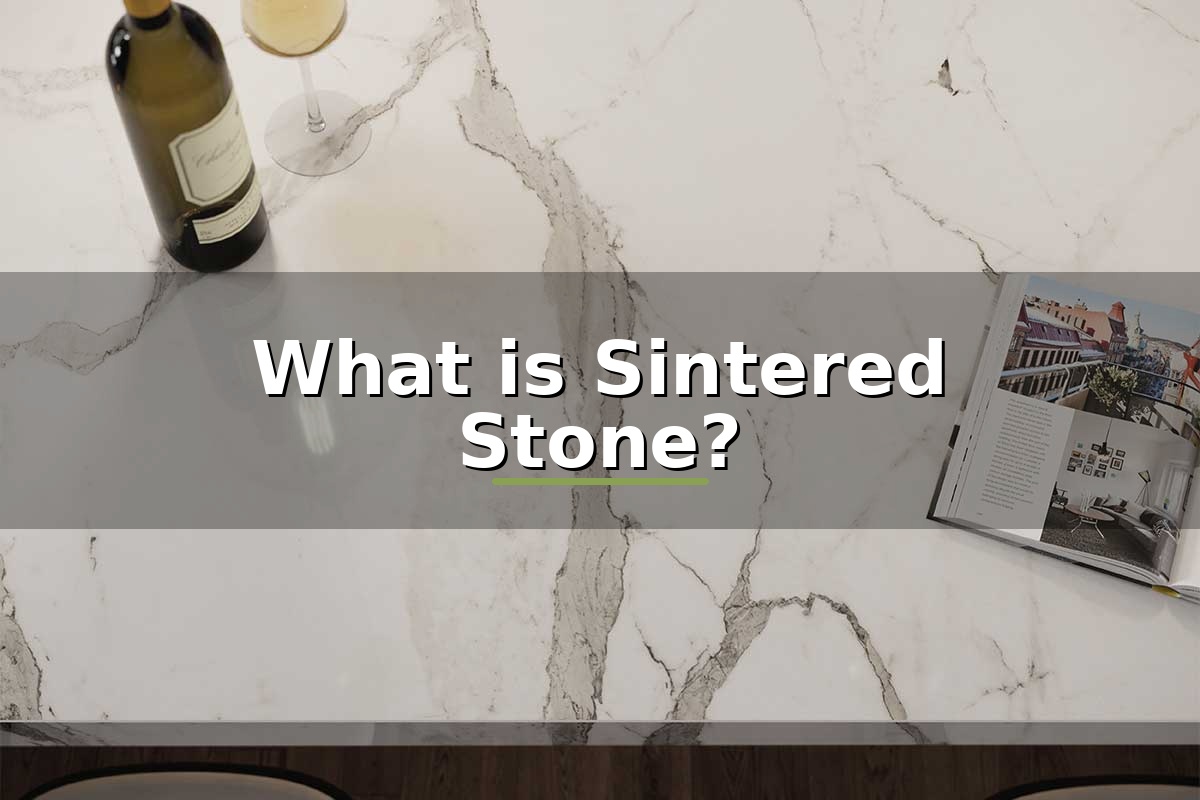
Combining a contemporary finish with high performance, sintered stone is an increasingly popular choice for kitchen worktops. Designed to mimic the look of natural stone, wood and metallic materials, it offers a high-performance and interesting alternative to natural stone and quartz that can handle heat, spills and heavy use – without compromising on style. If that sounds good to you, read on to explore the different types of sintered stone and how it compares to other types of stone. We will also share our expert tips for choosing the best option for your kitchen or bathroom worktops.
What exactly is sintered stone?
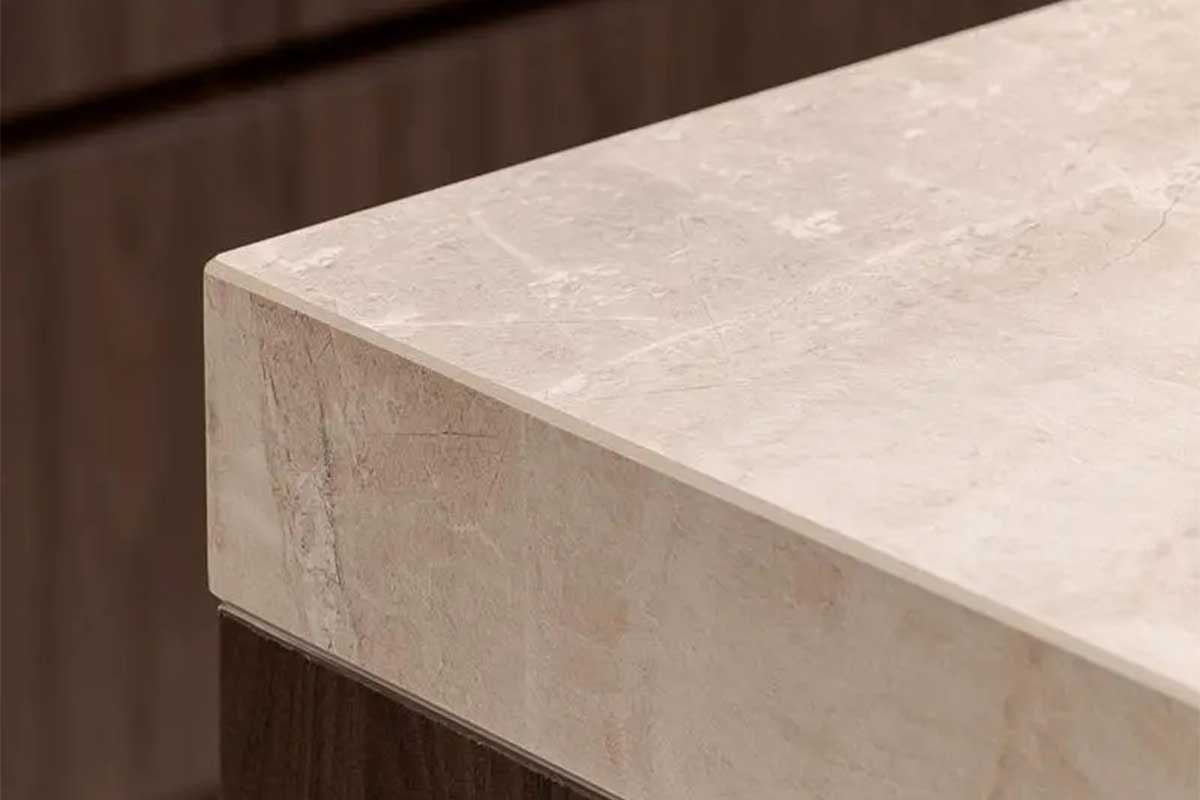
Sintered stone is a type of engineered stone surface made by compacting ground natural minerals such as quartz, feldspar and glass under extreme pressure and then heating to over 1200 degrees centigrade. These materials bond to form a very dense, solid slab. This process, known as sintering, creates a non-porous surface ideal for kitchens and bathrooms where heat and spills are common. Porcelain and ceramic surfaces are common forms of sintered stone.
Sintered stone is manmade but differs from quartz worktops, which are produced by using resin binders with ground stone. Sintered stone relies purely on heat and pressure to form its structure. And because it is manufactured rather than quarried, it has a more consistent appearance than popular natural stones like granite, quartzite and marble.
Is sintered stone the same as porcelain or ceramic stone?
If you’ve asked this question, you’re not alone. It is one of the most common questions our customers ask, as the terms are often used interchangeably.
Put simply, sintering refers to the manufacturing process, while porcelain and ceramic worktops describe the finished products. Both porcelain and ceramic worktops are created using sintering technology, which is why the terminology overlaps. You may also hear the term ‘ultra-compact surfaces’, often used by manufacturers to describe high-performance sintered stone materials.
For most homeowners, what matters most is how the surface looks and performs. In practice, porcelain, ceramic, and many ultra-compact stone surfaces are typically non-porous, low maintenance and highly resistant to heat and stains.
What types of sintered stone worktops are available?
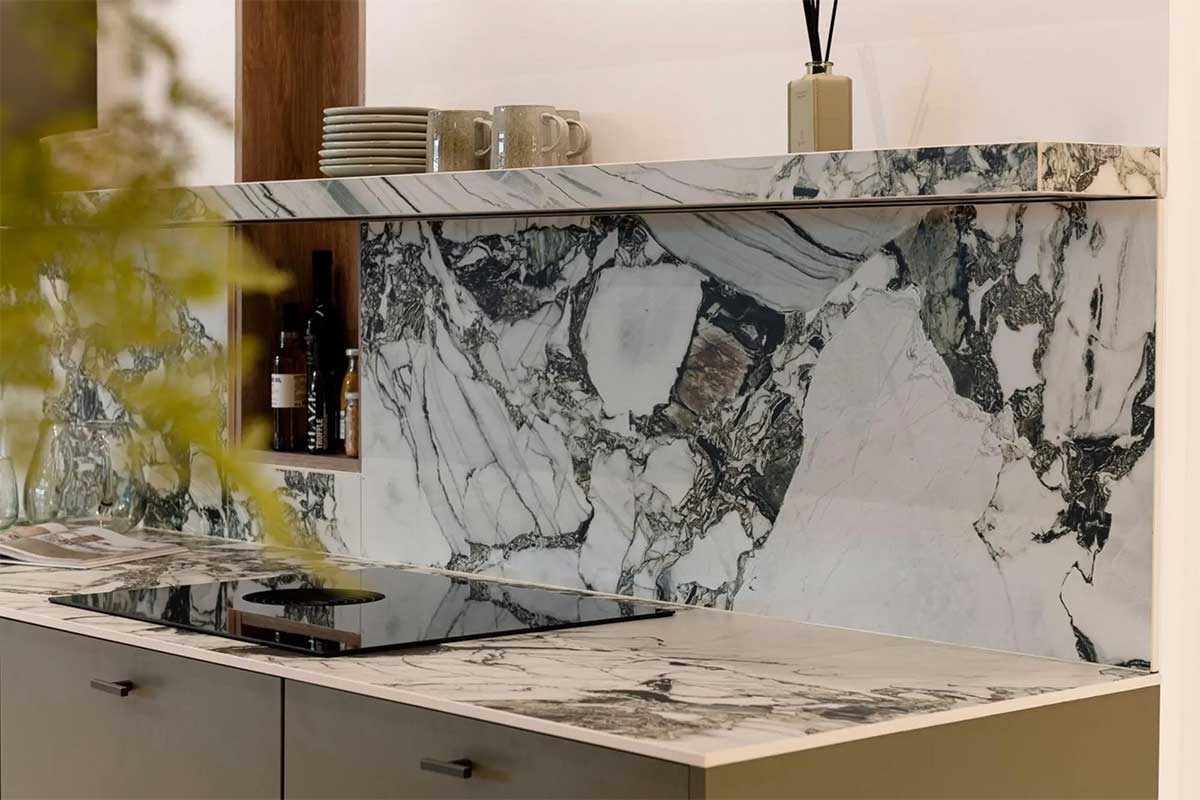
There are many different types of sintered stone specifically designed to be used for stone worktops. Although the sintering manufacturing process is similar, manufactures have developed their own specific material formulas. Sintered stone worktops come in a wide range of styles, colours and finishes, making them suitable for both modern and traditional kitchens.
At LBS Stone, we can fabricate and supply an extensive choice of sintered stone for countertops and vanities from leading brands. Each manufacturer offers different styles, finishes and slab formats to suit a range of kitchen and bathroom designs. Here are some popular sintered stone brands we offer:
- Dekton – possibly the best-known sintered surface material, often used in contemporary kitchens, particularly for large islands and seamless designs.
- Laminam – known for its refined, understated finishes that complement minimalist and high-end interior styles.
- Xtone – developed by Porcelanosa, providing bold, natural-inspired designs suited to statement worktops and feature surfaces.
- Uniceramica – a full-body porcelain range designed to replicate natural stone while ensuring improved durability and ease of maintenance.
- Ceraliso – a ceramic surface range focused on durability and everyday practicality across kitchens and bathrooms.
- Caesarstone porcelain – a design-led porcelain collection combining modern aesthetics with reliable performance for busy kitchens.
Design and finish options
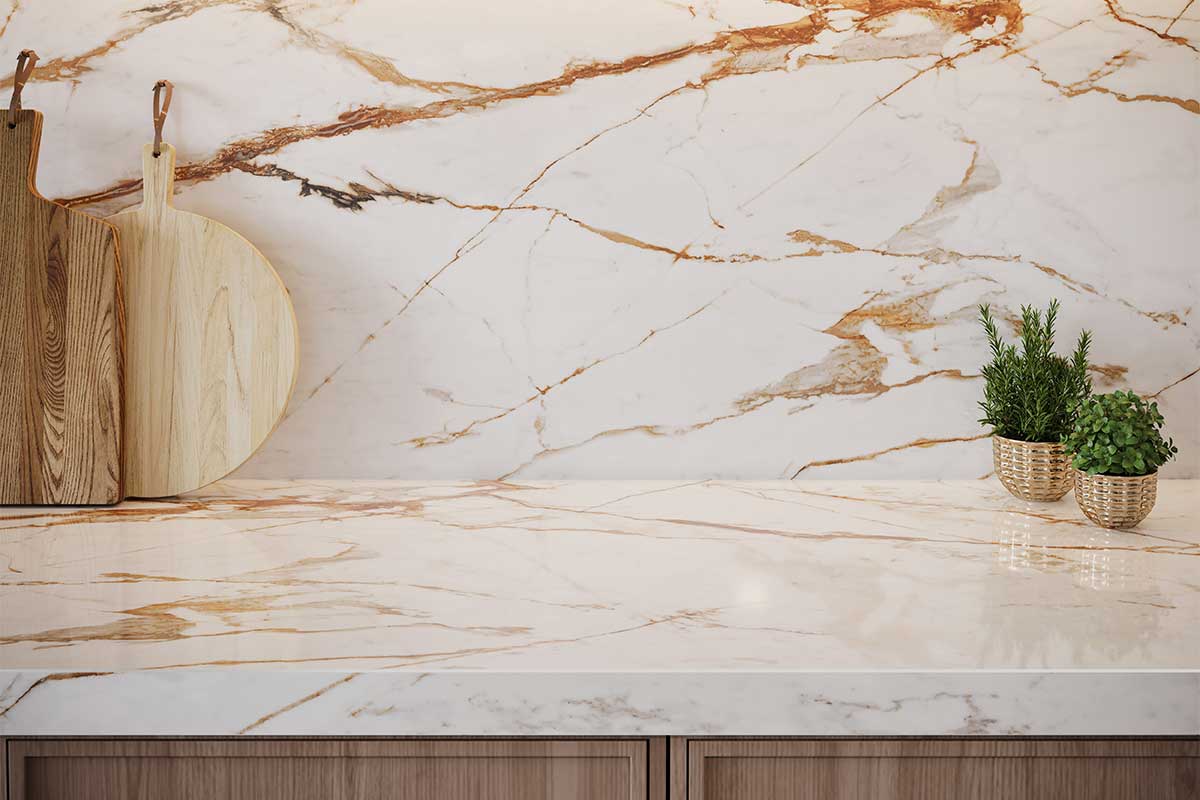
Sintered stone worktops are available in a host of designs to suit both subtle and statement kitchen décor schemes. Marble-effect surfaces are a popular option, offering the look of natural stone, but significantly more durable easier to care for. Concrete and stone-inspired finishes suit more contemporary interiors, while solid colours create a clean, minimalist appearance.
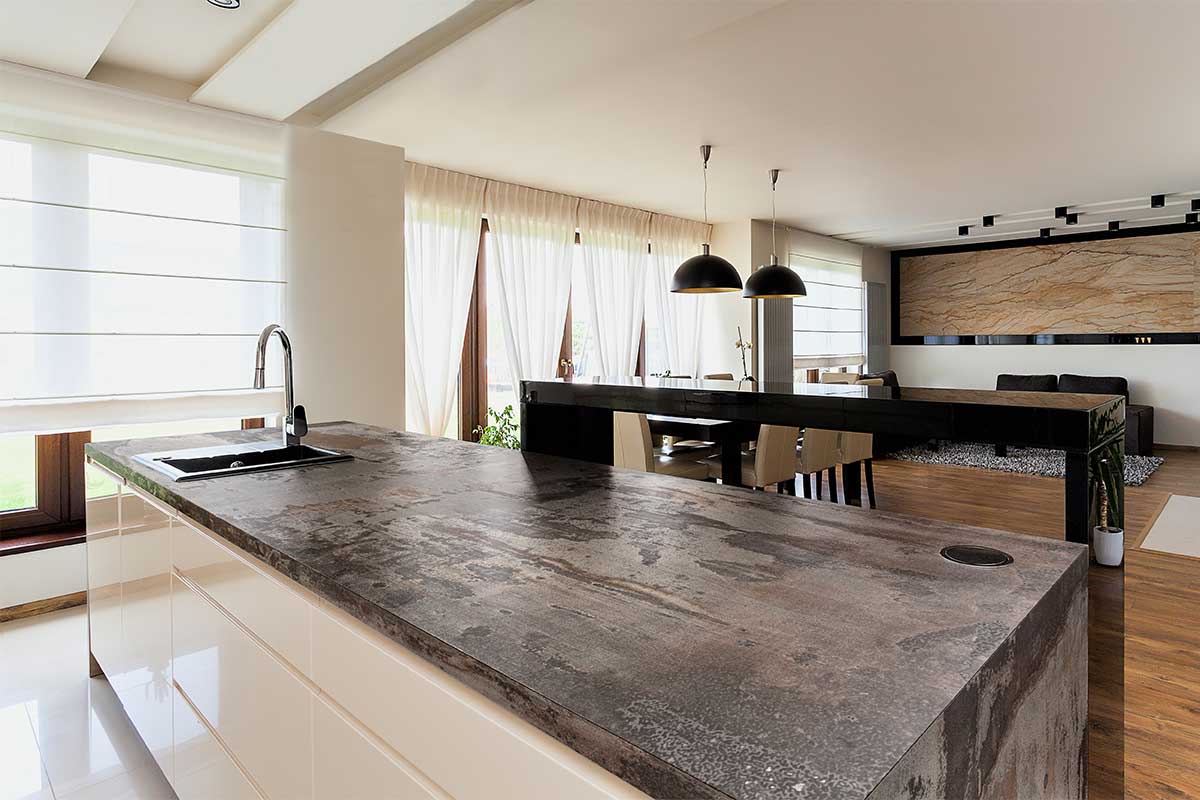
More decorative options, such as metallic and wood effects, can be used to create a focal point, particularly on islands or splashbacks. Most surfaces are available in matte, polished or textured finishes, so you can tailor them to suit both your practical needs and style preferences.
Applications
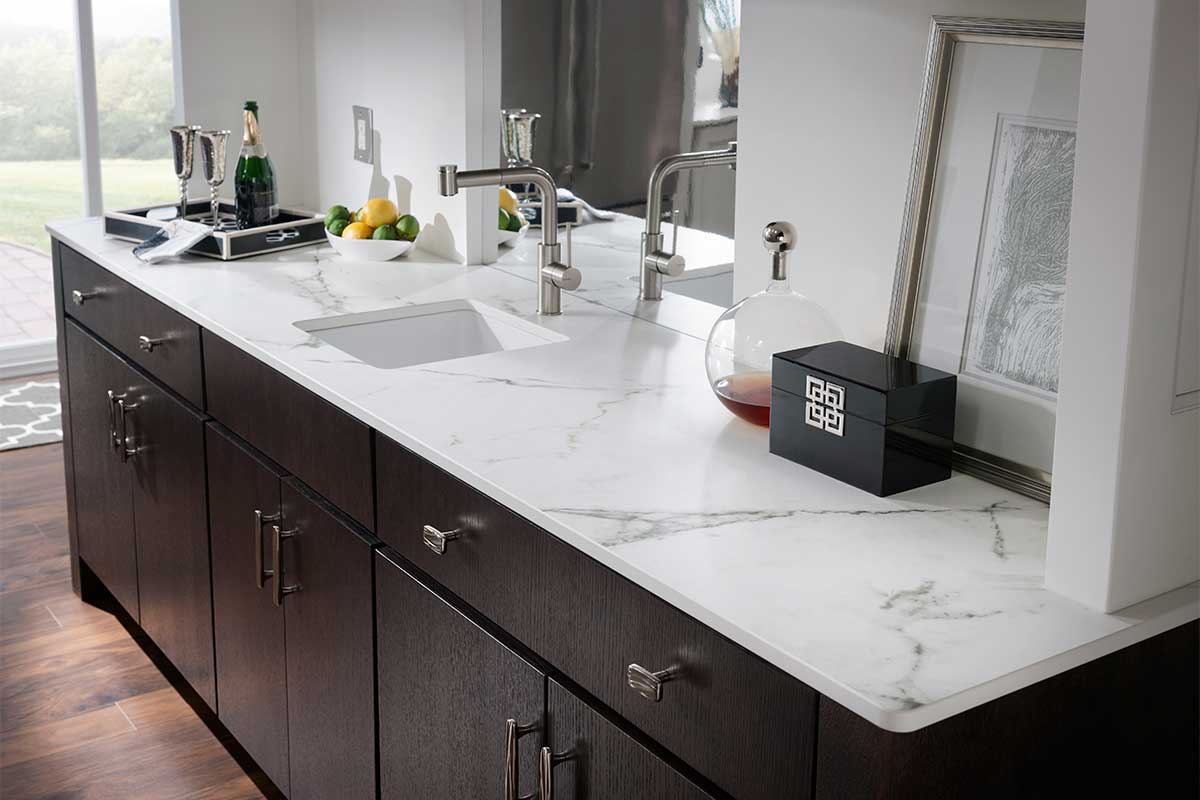
Although most commonly used for kitchen worktops, sintered stones are versatile materials that can be used throughout your home. In kitchens, it is ideal for worktops, islands and creating matching splashbacks. It is also well suited to bathroom vanity tops, bath surrounds, utility rooms, table tops and can also be used for interior wall cladding and outdoor kitchens. Thanks to its durability, low porosity and UV resistance, sintered stone countertops are also suitable for outdoor kitchens and bar areas.
What are the benefits and disadvantages of sintered stone worktops?
Pros of sintered stone worktops
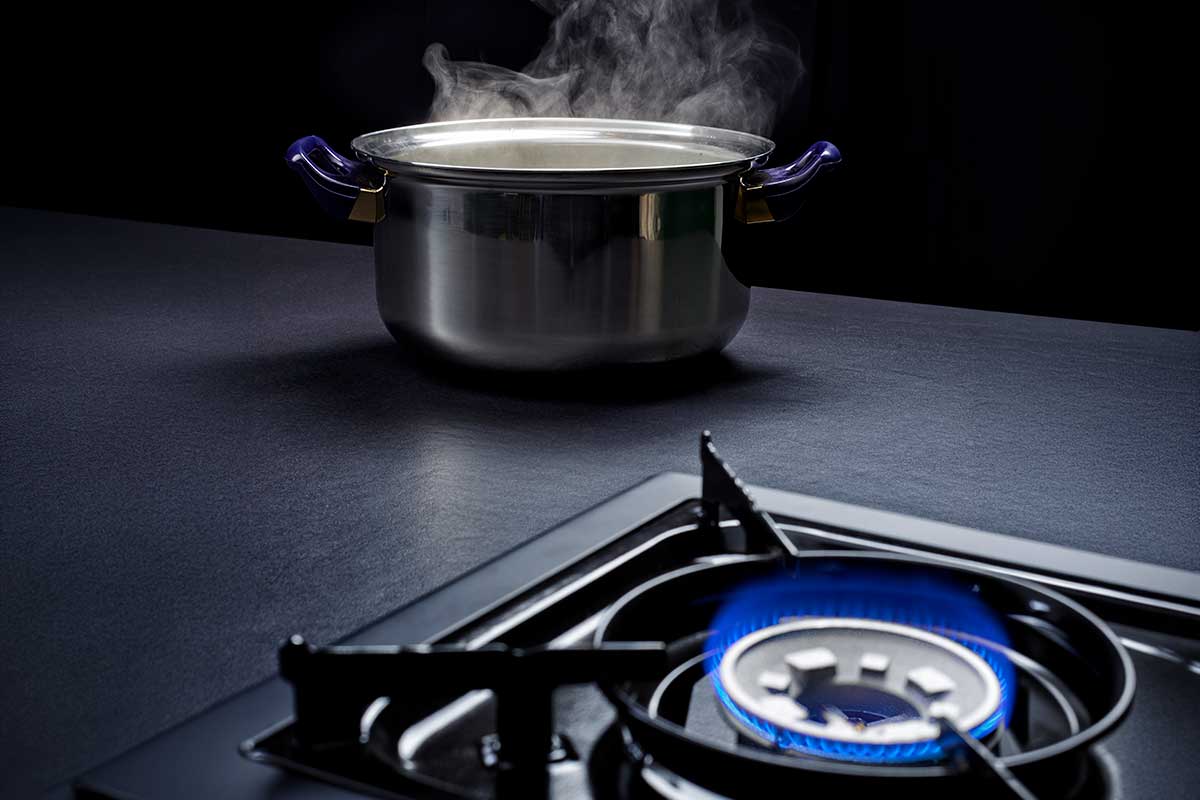
Sintered stone worktops are designed to handle the demands of everyday use while remaining very easy to maintain. They are easy to clean and do not need to be sealed like natural stone. One of the main advantages is their excellent heat resistance. As the material is formed at very high temperatures, it can cope with hot pans, making it ideal for busy family kitchens where tyle and practicality are key considerations.
They are also highly scratch resistant thanks to their dense structure that stands up well to daily wear. While not completely scratch-proof, they are significantly more durable than natural stones (particularly marble) and even quartz surfaces.
Similarly, as a non-porous material, sintered stone offers strong stain-resistance. Liquids will not soak into the surface, making it more hygienic, easy to clean and helping to maintain its appearance over time.
Another benefit is UV resistance, meaning colours remain stable even in bright kitchens with lots of natural light. This also makes many sintered stone surfaces suitable for outdoor use.
From a design perspective, sintered stone comes in a wide range of styles, from marble and stone effects to more contemporary finishes. Larger slab sizes also allow for fewer seams for more aesthetically pleasing kitchen islands and longer counters.
Cons of sintered stone worktops
While sintered stone performs well overall, there are a few considerations to keep in mind. Although highly durable, edges and corners can chip if subjected to a heavy impact. This is unlikely in normal use, but care should be taken with exposed edges. It should also be noted that natural stone and quartz can also be chipped and damaged by heavy impacts.
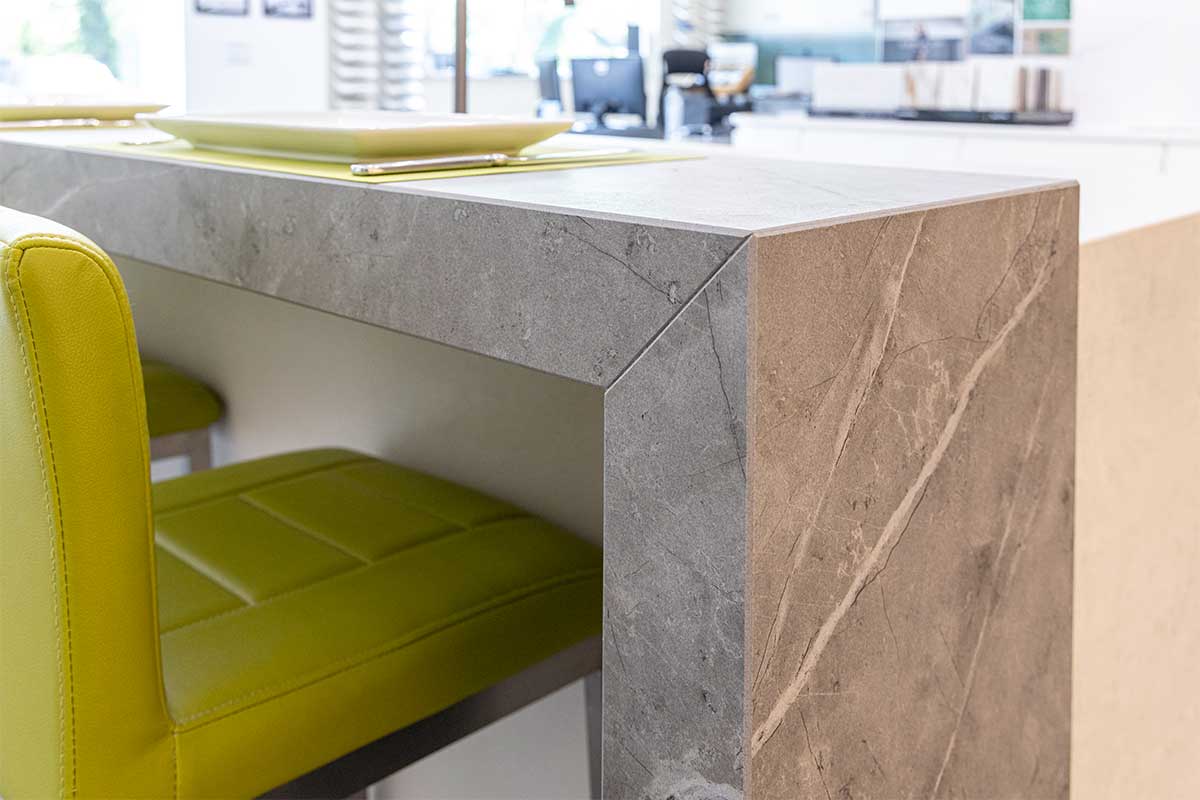
Another consideration is that many types of sintered stone are surface printed and not full-bodied, meaning that the colour, pattern and veining do not run continuously through the full thickness of the slab. As exposed edges do not match the surface, edge profile and finishing options can be more limited. Products such as Uniceramica porcelain, which is a full-bodied sintered stone, get around this issue and we can also produce a variety of mitred detailing and edge profiles suitable for sintered stone and porcelain worktops.
Cost is another factor to consider. Sintered stone is generally positioned as a premium surface material. It may therefore be more expensive than some natural stone and quartz options, although advances in manufacturing processes have made porcelain and ceramic surfaces more affordable in recent years. With that said, if you can stretch your budget, the added durability, ease of use, and wider variety of finishes and design possibilities are worth the slightly higher material cost.
Sintered stone vs quartz, granite and marble
Choosing between natural stone, quartz and sintered stone for your new worktops is a question of your preference, style, budget and the amount of care you are prepared to do. The table below provides a simple comparison of sintered stone alongside other popular surface options to help you make an informed choice.
| Material | Best for | Main advantages | Main considerations |
|---|---|---|---|
| Sintered stone | Busy kitchens, modern designs, outdoor kitchens | Excellent heat, stain, scratch and UV resistance, non-porous and hygienic, low maintenance, suitable for large-format designs | Requires specialist fabrication, edges can chip under heavy impact, premium material |
| Quartz | Practical family kitchens with a wide choice of colours | Strong stain resistance, consistent colours and patterns, widely available, easy to clean | Less heat and UV resistant than sintered stone, not suitable for outdoor use |
| Granite | Natural stone character and traditional or modern kitchens | Unique patterns and natural variation, durable surface, strong heat resistance | Requires sealing, variation between slabs can make matching more difficult |
| Marble | Luxury kitchens and statement surfaces | Distinctive veining, timeless appearance, natural elegance | Porous and softer than other materials, can stain, scratch or etch, requires more maintenance and sealing |
In general, sintered stone stands out for its combination of durability, low maintenance and design flexibility. Meanwhile, quartz surfaces offer consistency and are generally slightly more affordable, and natural stone materials provide more variation and natural character.
How to choose the right sintered stone worktop for your kitchen
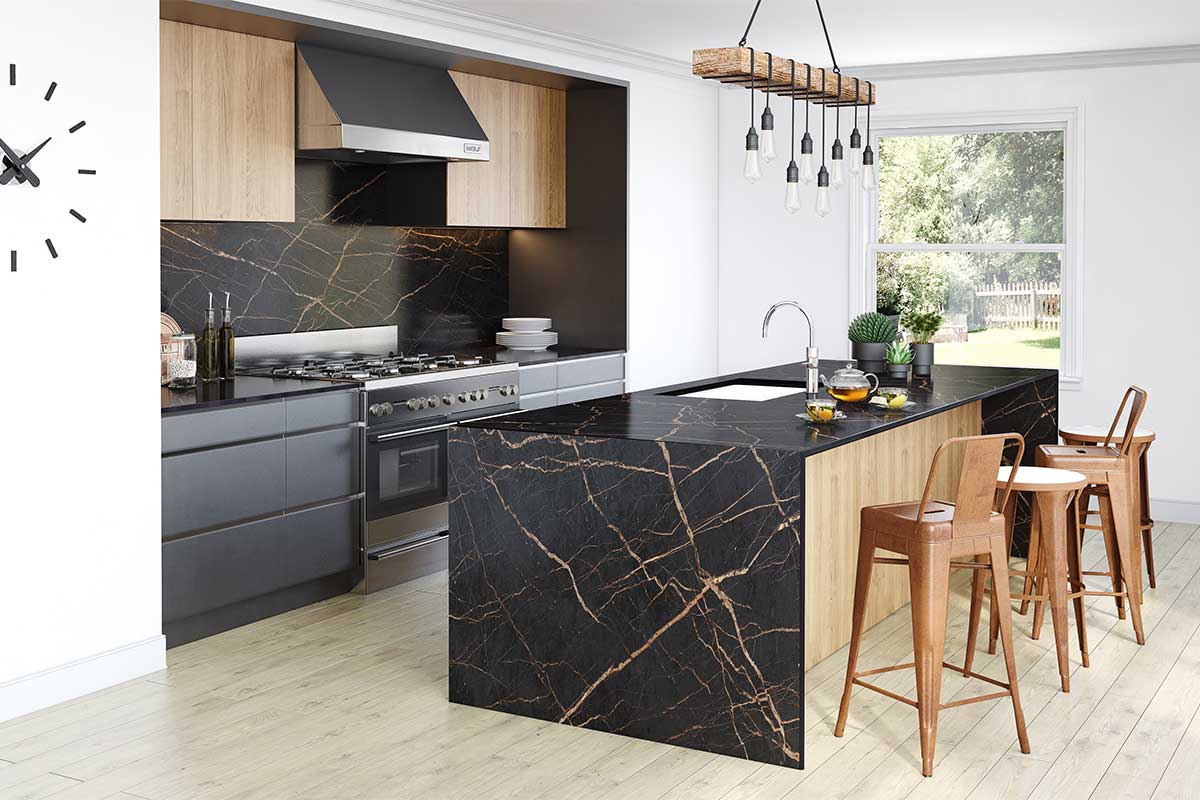
Start by considering how your kitchen is used. Busier spaces may benefit from finishes that are more durable and forgiving, while design-led kitchens may focus more on appearance.
In terms of style, matte finishes are subtler and tend to show fewer marks. Polished surfaces, on the other hand, give a more reflective look. Colour also plays an important role, with light tones creating a brighter feel and darker options adding contrast and to lighter cabinetry or a dramatic effect to walls.
Details such as edge profiles and splashbacks can also help to refine the overall design. Features like mitred edges or waterfall ends create a more seamless and considered finish.
Not sure which material is right for your kitchen? Visit our stone worktops showroom in Storrington to compare surfaces side by side and get expert advice from our team advice based on your layout, interior décor and how you use your space.
Why choose LBS Stone for sintered stone worktops?
Choosing the material is only part of the process – you’ll also need an expert fabricator and installer to ensure best results. LBS Stone designs, manufactures and installs a complete range of worktops and decorative stone surfaces in West Sussex and across the UK. Our team has over 25 years’ experience working with sintered stone, quartz, granite, marble and more, and excel in helping retail and trade customers to choose the correct stone for their project.
With the largest possible choice of natural stone, quartz and sintered stone and access to every leading brand, customers can view finishes in person and get practical advice on what will work best for them.
As a full-service stone surface specialist, we will look after your entire project, from stone sourcing and fabrication to measuring and final installation, with every process undertaken by our in-house teams. As a founding member of the Worktop Fabricators Federation, you will experience the highest levels of expertise, workmanship and customer service. LBS Stone undertake both retail and trade projects in Southeast and across the UK. Contact us today for expert advice or a free quote with no obligation.
Planning a kitchen or bathroom makeover?
If you’re considering sintered stone, porcelain or ceramic worktops, seeing the materials in person and getting expert advice can make all the difference. It gives you a clearer picture of available surface materials and what is suitable for your need and a true sense of colour, texture and finish, helping you choose a surface that works with your space and lifestyle.
We encourage you visit our Storrington showroom to explore options and speak to our team about your project. When you are ready to move forward, LBS Stone can arrange a home measuring visit to get the process started. We can also provide free samples and no-obligation quotations on request.
Sintered stone fequently asked questions
Answers to frequently asked questions about sintered ceramic and porcelain worktops and surfaces, and the services that LBS Stone offer.
What is sintered stone made from?
Sintered stone is made from pure ground minerals, stone particles, glass and pigments compacted and fired under intense heat and pressure. This creates a very dense, non-porous stone slab that is highly durable and resistant to heat, stains and scratches.
Is sintered stone good for kitchen worktops?
Yes, sintered stone worktops are an excellent choice for kitchens, and bathrooms. They offer great heat and stain-resistance and a non-porous surface that does not require sealing, is hygienic and very easy to clean.
Is sintered stone better than quartz?
It depends on your priorities. Sintered stone generally performs better in terms of heat resistance, UV stability and outdoor suitability. Quartz, on the other hand, is available in a huge variety of colours and patterns and is a popular, practical option for many kitchens.
Is sintered stone the same as porcelain?
Not exactly. “Sintering” technically refers to the manufacturing process that is used to produce porcelain and ceramic stone surfaces. Porcelain and ceramics are forms of sintered stone.
Can you put hot pans on sintered stone?
Sintered stone surfaces are highly heat resistant and most brands state that their porcelain or ceramic surfaces are safe for hot pans. No matter what type of stone you choose, we always recommend protecting your stone worktops form hot pans with trivets or heat mats to prevent thermal shock and cracking.
Does sintered stone stain?
Sintered stone is highly stain resistant because it is non-porous, meaning it doesn’t absorb liquids and will not stain. However, is still advisable not to leave strongly coloured or acidic liquids in contact with your worktops for long periods.
Does sintered stone scratch?
It is highly scratch resistant and suitable for everyday use, but it is not completely scratch-proof. Using chopping boards is recommended to protect both the surface and your kitchen knives.
Can sintered stone be used outside?
Yes. Many porcelain and ceramic sintered stone materials are suitable for outdoor use thanks to their UV resistance, frost resistance and low water absorption. However, suitability can vary by brand and product, so it’s advisable to take advice from a stone specialist about the best type of sintered stone for your project.
Does sintered stone need sealing?
No, sintered stone worktops do not require sealing. Their non-porous surface is one of the materials key advantages, making it easier to clean maintain than most natural stone and some forms of quartz worktops.
Is sintered stone expensive?
Sintered stone is generally considered a premium worktop material. The overall cost will depend on factors such as the brand, slab size, thickness, design details and installation requirements. If you’d like to find out more, please contact us on 01903 742550 for a quote.
Does LBS Stone manufacture and fit sintered stone worktops in Sussex?
Yes, we provide a complete manufacturing, measuring and installation service for sintered stone worktops, vanity tops, and other types of decorative stone surfaces in Sussex and across the UK. Furthermore, we offer the widest possible selection of sintered porcelain and ceramic surface options through our relationships with leading stone brands. Our services cover both retail and commercial projects, and we have over 25 years of experience.