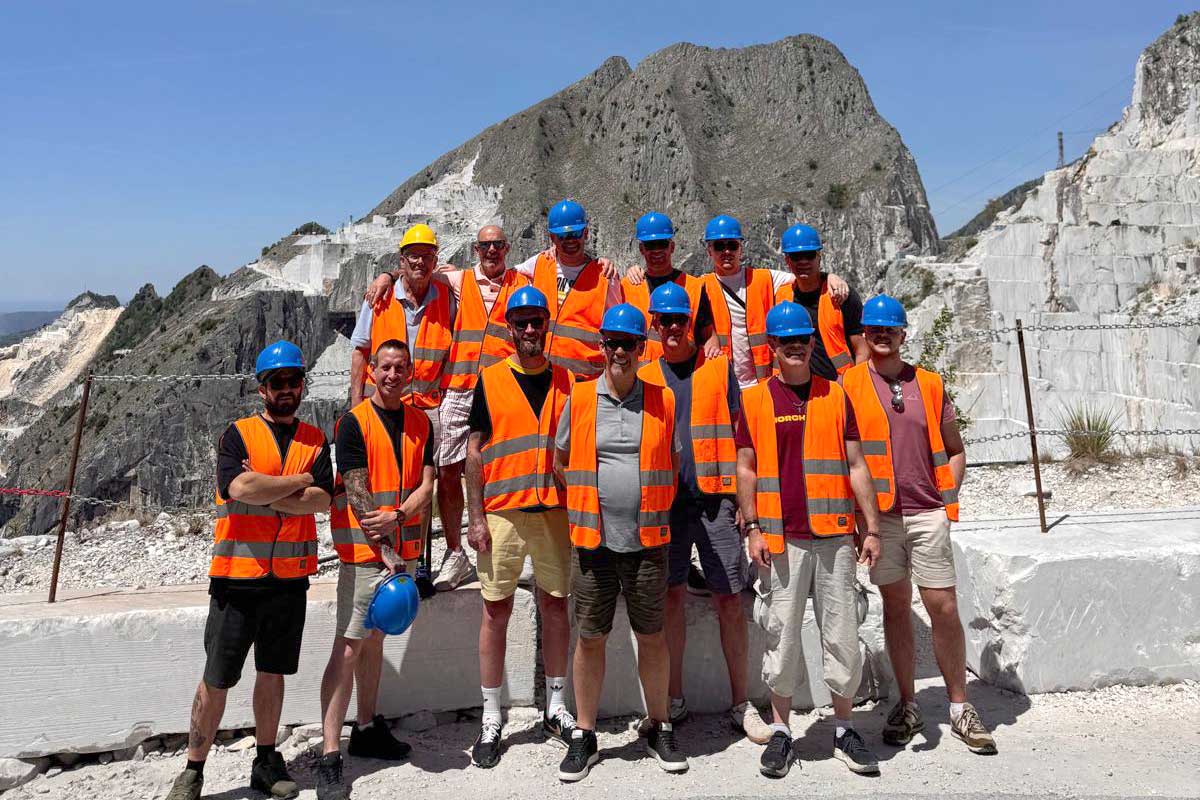
Carrara marble is something most people only encounter as finished bathroom or kitchen worktops. They recognise its crisp white background and distinctive grey veining but rarely stop to think about the journey it has taken to get there. To gain a better understanding of that process, the LBS Stone team recently travelled to the famous Carrara marble quarries in northern Italy.
At LBS Stone, we work with marble every day, transforming carefully selected slabs into bespoke kitchen worktops, splashbacks, vanity tops and other interior surfaces. However, visiting the quarries gave us the opportunity to see the material at its source – still within the mountain itself. Here’s what we discovered during our trip…
Arriving at the Carrara mountains – our first impressions
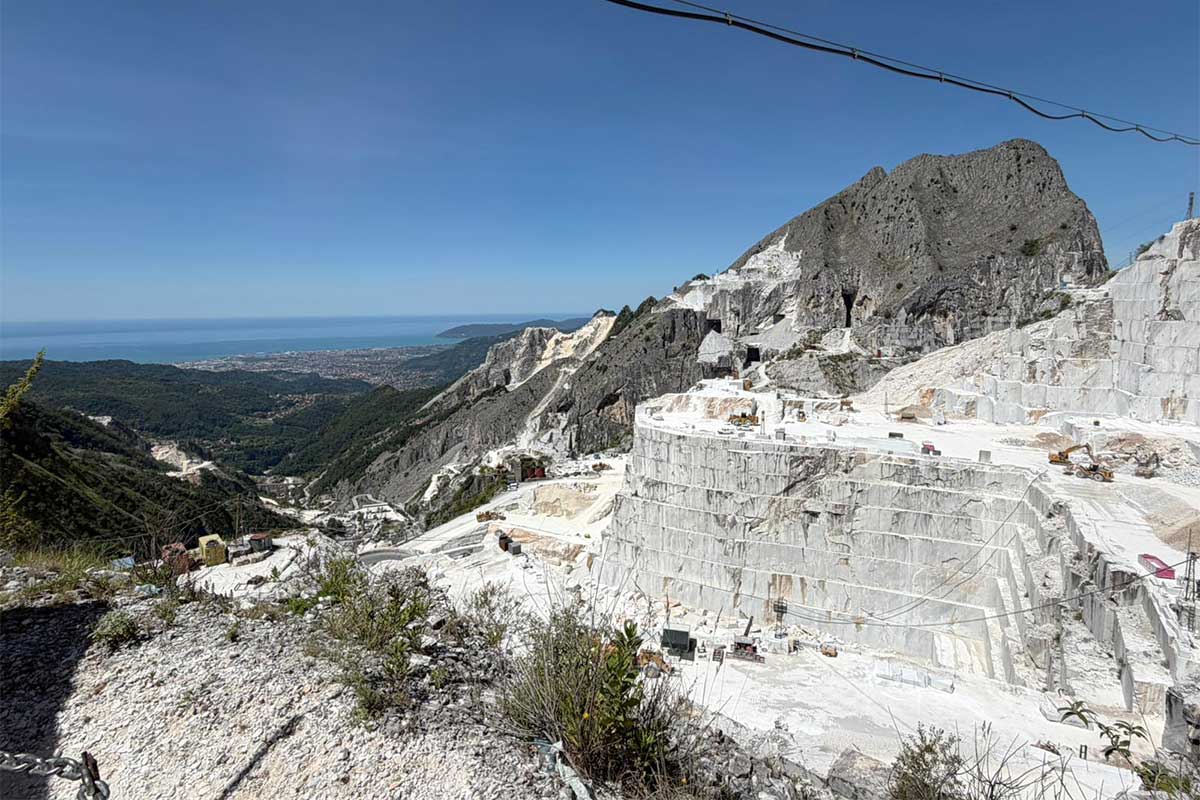
Earlier this summer, the LBS team visited Quarry No. 83 Canalgrande Alto in the Apuan Alps of northern Tuscany. Situated around 1,000 metres above sea level, the quarry offers spectacular views across the Apuan-Versilian coastline and the Ligurian Sea. Its dramatic landscape has even featured in the opening car chase scenes of the 2008 James Bond film Quantum of Solace.
Among those on the trip were Marcus Jones and Ryan Buck, who shared their impressions of seeing Carrara marble at its source. Marcus said:
“Driving up to the Carrara mountain was beautiful. As you get closer, you start to see where previous extraction has taken place, and where older quarrying has started and stopped. Before you even reach the more active areas, you get a real sense of the history of the place.”
In fact, large-scale extraction of Carrara marble began under Roman rule in the 1st century BC, when the stone was transported throughout the Roman Empire for use in temples, monuments and grand public buildings. Known to the Romans as Luna marble, it has remained one of the world’s most highly regarded natural materials for more than 2,000 years.
The scale of the quarry was one of the most memorable parts of the trip, as Marcus recalls:
“What struck me most was the sheer scale of it. You see Carrara marble as a beautiful, finished worktop or vanity top in the showroom, but standing in the mountain and seeing where it comes from gives you a completely different appreciation of the material.”
Standing among the vast quarry faces gave the team a very different perspective on a stone that is often only seen once it has been cut, polished and installed.
A stone with a long journey
One of the most interesting parts of the visit was getting a behind-the-scenes look at the journey Carrara marble takes before it ever reaches our workshop.
During the guided tour of the working quarry, the LBS team saw first-hand how the stone is quarried both above and below ground, before being carefully cut into the enormous blocks that are transported for processing. Marcus said:
“Seeing the marble in the mountain really brings home that every slab is part of something much bigger. It is not just a surface. It is a natural material with history, character and a huge amount of work behind it before it ever reaches a customer’s home.”
Some of the older areas showed how stone had been removed from the mountain over time, while the more recent areas demonstrated the modern methods now used to carefully extract large blocks.
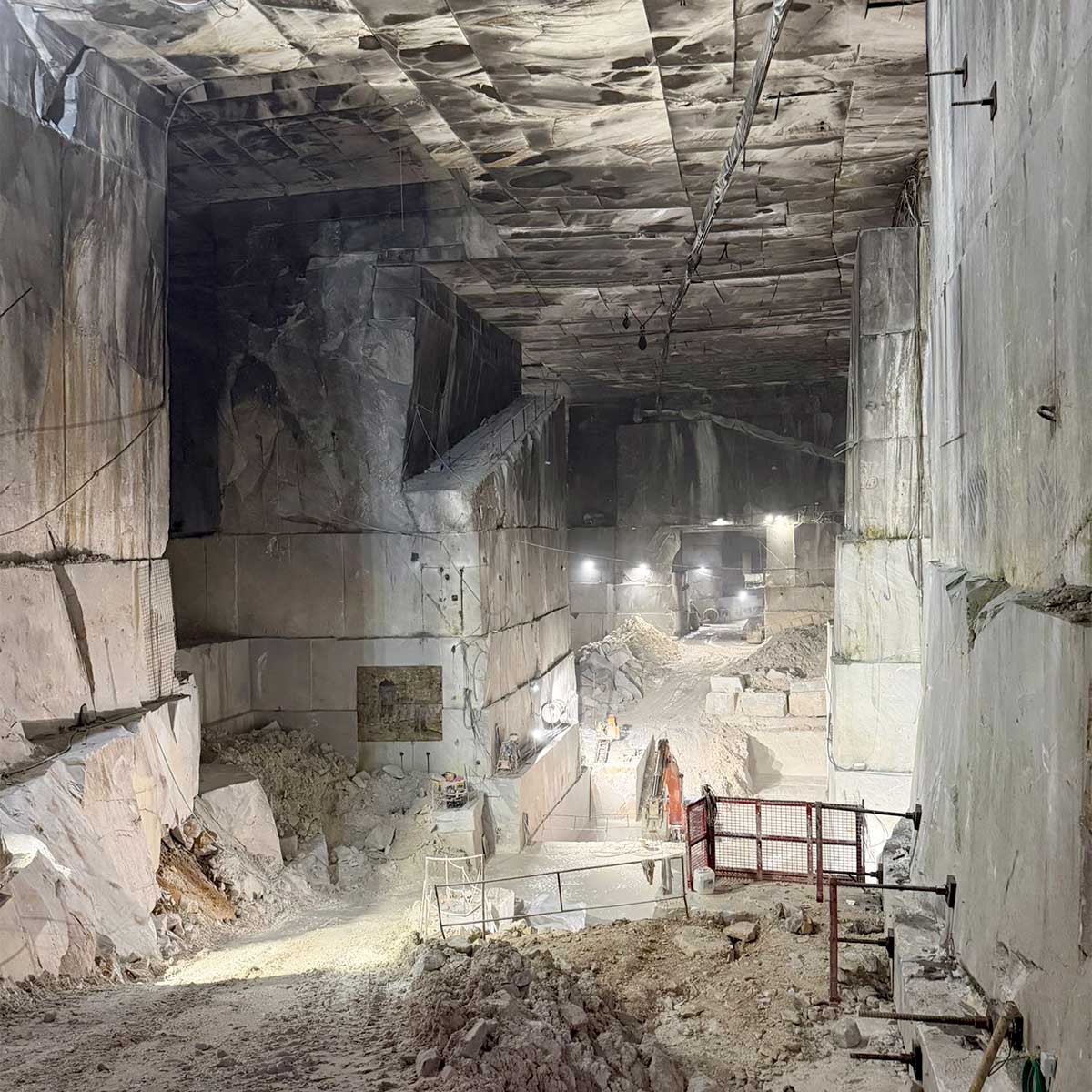
Although the quarry’s towering rock faces dominate the landscape, some of the most fascinating work takes place beneath the surface. Deep inside the mountain, extraction is carried out on a much smaller scale, with just a handful of workers removing marble to order.
We learned that some of Carrara’s finest-quality stone is found deeper underground, where the marble is often brighter, denser and more consistent. Large pillars of untouched marble are left throughout the tunnels to support the caverns, and every stage of the extraction process is carefully managed to protect both the environment and the people working in the quarry.
How Carrara marble is cut from the mountain
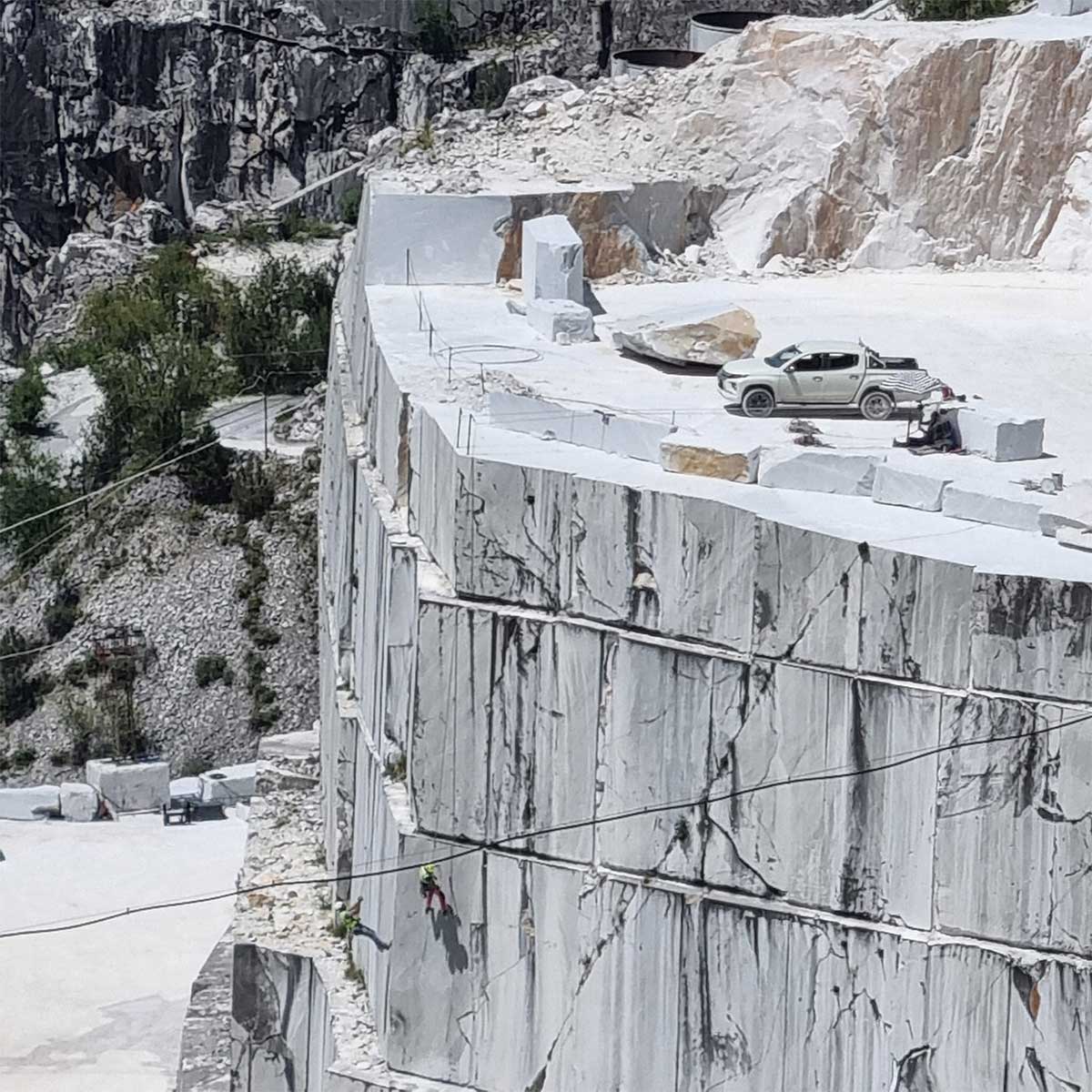
Extracting Carrara marble is a highly skilled process that combines specialist machinery with years of experience. Rather than simply cutting stone from the mountainside, quarry workers carefully plan each extraction to maximise the quality of every block.
The marble quarrying process is time consuming and begins by drilling a series of precise holes through the rock. A continuous diamond wire is then threaded through these openings and fed around a powerful rotary machine to slowly slice through the marble. Although the cutting itself can take several days, preparing and removing a single block typically takes between two and three weeks.
Once separated from the quarry face, the block is tipped onto a bed of marble dust and sediment, which helps absorb the impact as it comes free. Even with meticulous planning, this process is unpredictable. Natural fractures within the stone can cause blocks to split as they fall, so removing a large block intact is difficult.
To lessen the risk, skilled quarry workers can be seen inspecting natural fissures while suspended by ropes against the rock faces. They then fill the cracks with stabilising compounds to strengthen vulnerable sections and prevent movement during extraction to maintain both the quality of the stone and everyone’s safety. Ryan noted:
“The quarry really showed how much skill and planning goes into getting the marble out of the mountain. The machinery is huge, but the process still feels very controlled and precise.”
Processing Carrara marble into slabs
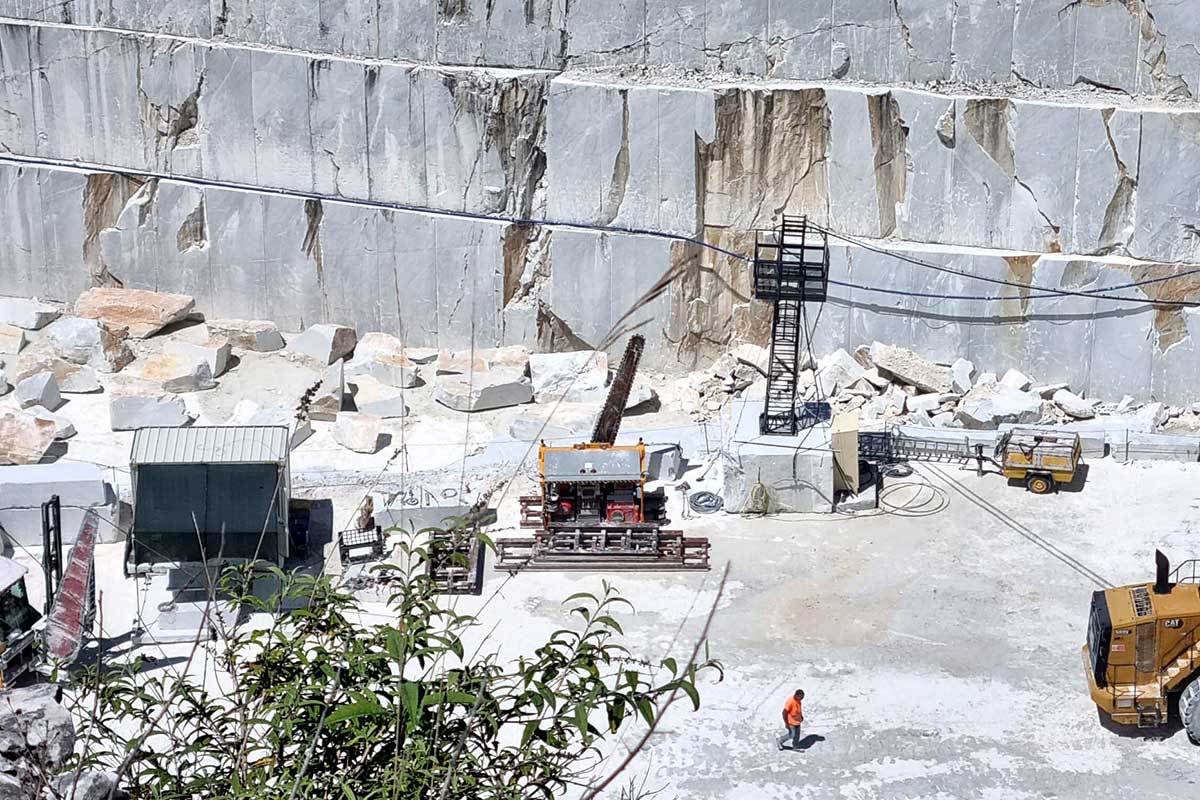
Standing in the quarry, it’s hard to imagine that these enormous 20 tonne blocks of marble will one day become kitchen worktops and bathroom vanity tops.
After being extracted, the blocks are transported to specialist processing facilities around the world, where they are cut into slabs, polished and prepared before being supplied to specialist stone fabricators like LBS Stone.
Exactly where each block is processed depends on the supplier, the facilities involved and its intended destination. By the time the marble reaches our workshop, it has already travelled a considerable distance and undergone several stages of preparation before fabrication starts.
Seeing the marble before it reached this stage also gave the team a greater appreciation of the qualities that make Carrara so sought after. Its natural crystalline structure catches and reflects the light, creating a subtle shimmer that gives the stone depth and character – an effect that’s difficult to fully appreciate in photographs. Marcus explains:
“You can see photographs and videos of the Carrara mountain quarries, but physically being there and seeing it in action is completely different. The stone has a real sparkle under the right light, and when you understand the journey it goes through before it becomes a worktop, you appreciate it so much more.”
Why Carrara marble has remained world-famous
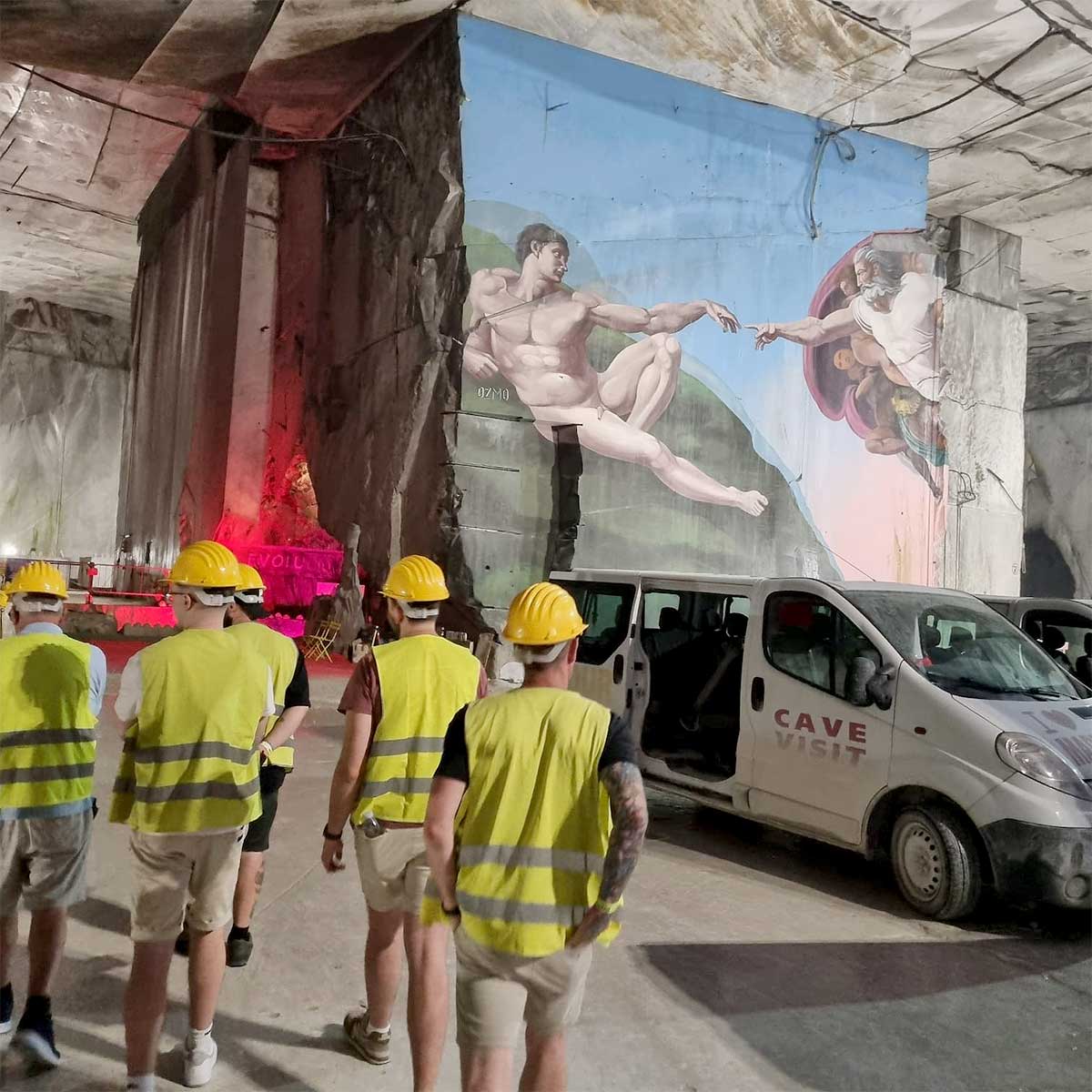
Formed over millions of years from ancient marine organisms whose calcite-rich shells recrystallised into fine-grained stone, Carrara marble is prized for its bright white background, elegant grey veining and exceptional quality.
These qualities made Carrara marble a prized material for generations of sculptors. During the Renaissance, Michelangelo personally selected Carrara marble for many of his most celebrated masterpieces, including David, La Pietà, Moses and one of his lesser-known works, the Taddei Tondo relief of the Madonna and Child, which can be seen here in the UK.
From Roman monuments and Renaissance masterpieces to today’s kitchen worktops and bathroom vanity tops, Carrara marble has remained one of the world’s most admired natural stones for more than two millennia.
More than just Carrara marble
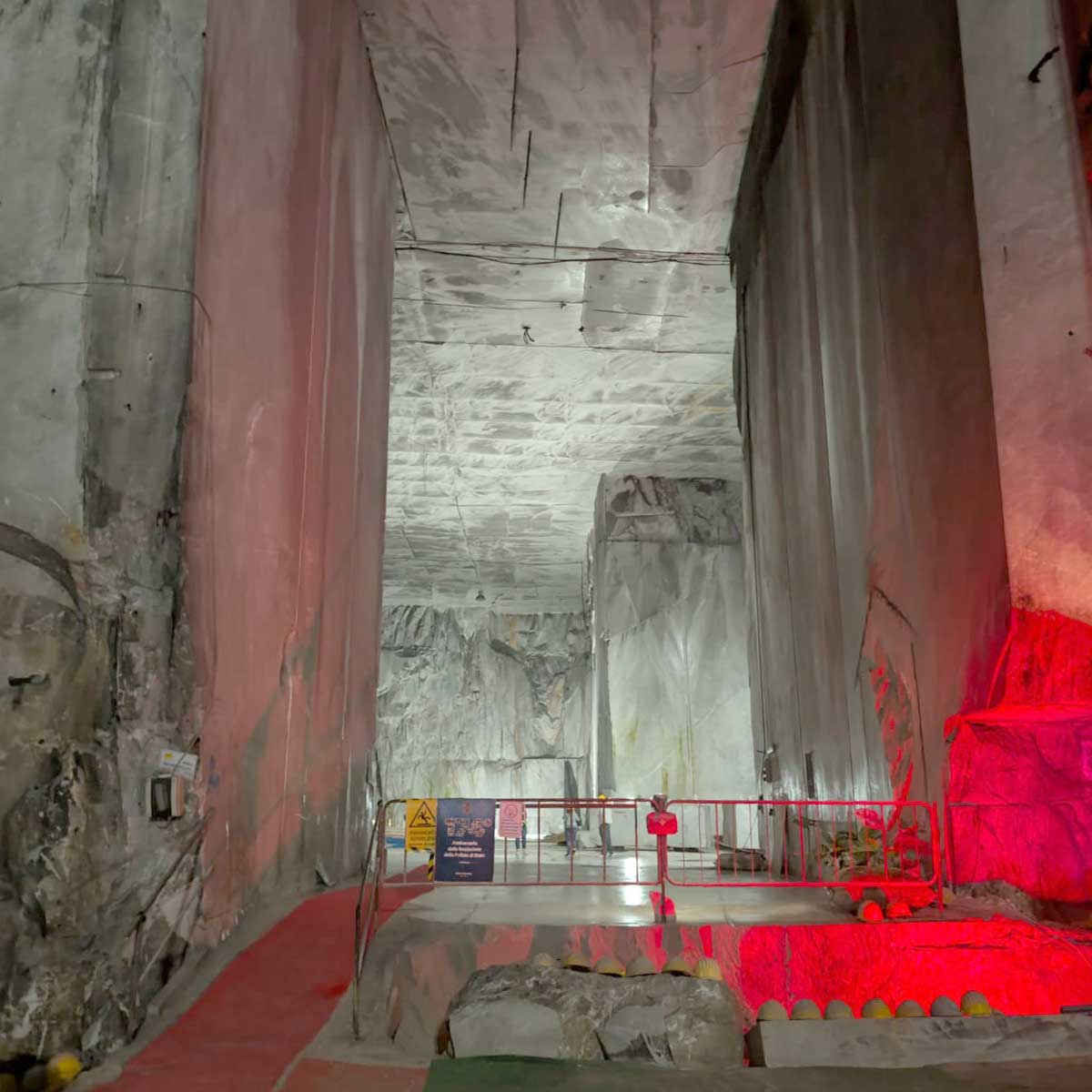
Although the Carrara region is renowned for its iconic white marble, our visit revealed that the quarries produce a far wider variety of stone than people realise. Among them is Bardiglio marble, a bold grey alternative to classic Carrara that is well suited to contemporary interiors.
We also discovered how naturally occurring minerals influence the appearance of the stone. In some areas, iron oxide had created distinctive reddish streaks through the marble, revealing another example of the unique geological processes that shape every block.
Another surprise came from learning what happens to the material that isn’t used for slabs. Instead of going to waste, the fine marble dust produced during cutting is collected and reused in products from cosmetics and toothpaste to paints and other household goods. It was a great reminder that there’s much more to Carrara than just the white marble its known for.
From Carrara Marble Quarries to West Sussex – what the team gained from their visit
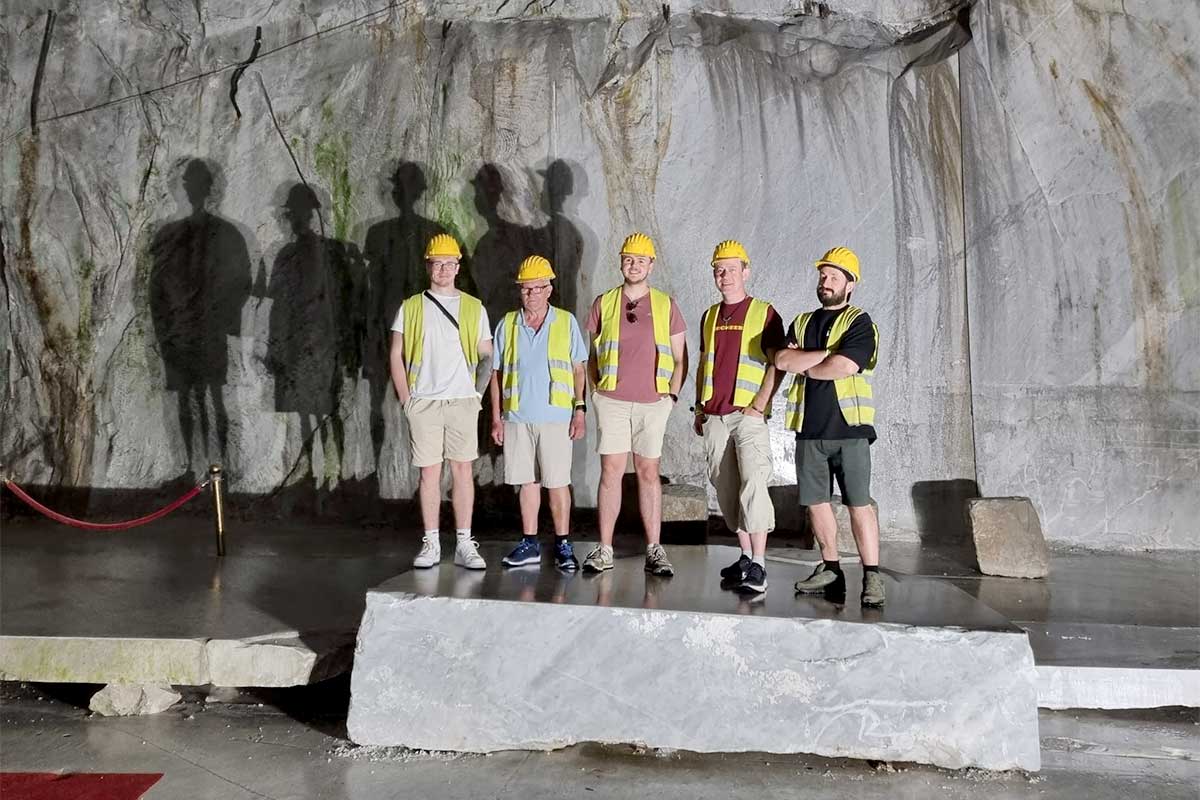
For the LBS team, visiting the quarries provided a fresh insight into the scale and complexity of the process behind every slab.
Seeing where Carrara marble begins its journey gave the team a greater appreciation of everything that happens before the marble arrives at our West Sussex workshop, from careful extraction and processing to transportation and selection.
It also reinforced the important role LBS plays in the final stage of that journey, transforming natural stone into beautifully finished surfaces. As Ryan explains:
“What stood out to me was how connected the quarry is to what we do back in West Sussex. By the time the stone reaches our workshop, it has already been through an incredible journey, and then it is down to us to template, cut, polish and fit it properly for the customer.”
Because marble is a naturally occurring material, no two slabs are exactly the same. Each one features variations in veining, colour and pattern, so each project requires detailed understanding, expertise and careful planning, from slab selection through to handling and fabrication. This ensures the finished surface looks balanced and makes the most of the stone’s unique natural beauty, especially when it comes to the larger projects we undertake for clients.
A deeper appreciation of Cararra and other forms of marble
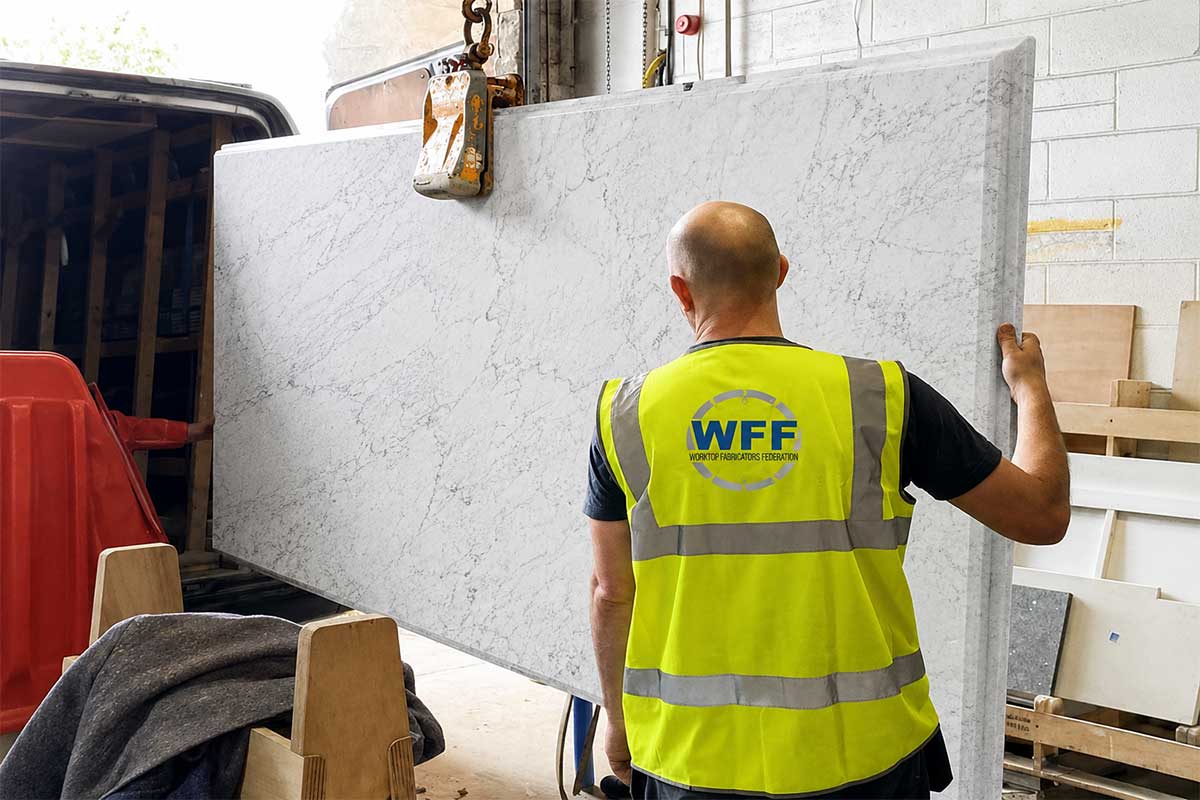
Visiting the Carrara quarries gave us a deeper understanding of everything that happens before the marble reaches our workshop and reinforced the craftsmanship behind every project we complete.
Every slab has a story long before fabrication begins. It has been carefully extracted, processed and prepared by skilled people whose expertise is every bit as important as the work we do at LBS.
Following the process from mountain to workshop gave the team a fresh perspective on the material we work with every day. From there, it’s our job to carefully craft each piece into bespoke surfaces that fit seamlessly into our customers’ homes.
Advice for using Carrara marble worktops and vanities in your home
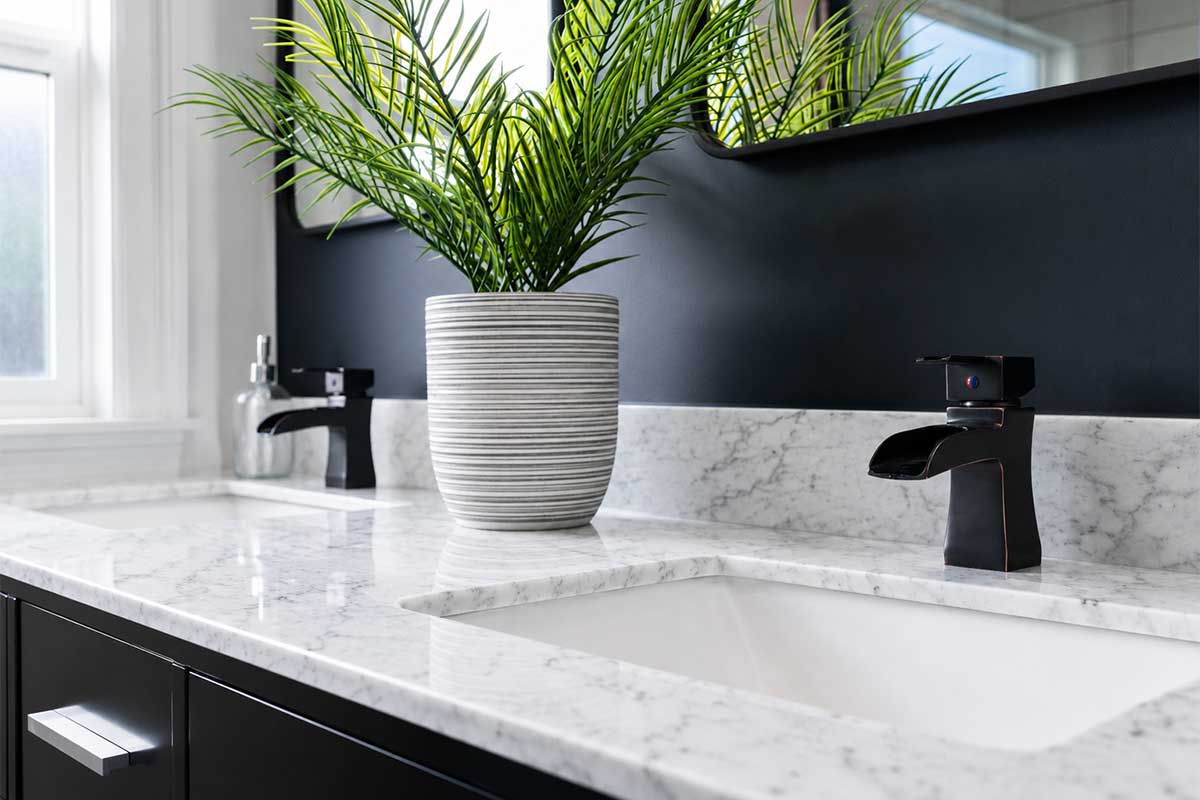
Carrara marble remains one of the most beautiful materials available for interior stone surfaces. Elegant, timeless and instantly recognisable, it is a popular choice for kitchen worktops, bathroom vanity tops, splashbacks, architectural wall features and more. If you’re thinking about installing marble worktops, it’s important to understand how they perform before making your decision.
As a natural material, Carrara marble behaves differently from engineered surfaces such as quartz and porcelain. Its porous surface requires a little more care as acidic foods, drinks and some household cleaning products can damage the surface and untreated spills may lead to staining or etching.
For many homeowners, the natural ageing process is part of marble’s appeal, allowing the stone to develop a unique patina over time. But others may prefer the added durability and lower maintenance offered by engineered surfaces, particularly in busy family kitchens.
Marcus explains:
“For a customer considering Carrara marble, I would say it is one of the most beautiful stones you can choose, but it is also important to understand it properly. It will need more care than quartz or porcelain, but if you love natural stone and the way it ages, it can be absolutely stunning.”
This is where we can help. We will discuss the benefits and considerations of marble with you, explain how it compares with quartz, granite and porcelain, and help you decide which material is best suited to your project.
For some projects, Carrara marble may be the perfect choice. For others, modern marble-effect quartz or porcelain offer a highly realistic alternative with greater resistance to staining and scratching, making it better suited to busy family homes.
Carrara marble worktops and surfaces for your home
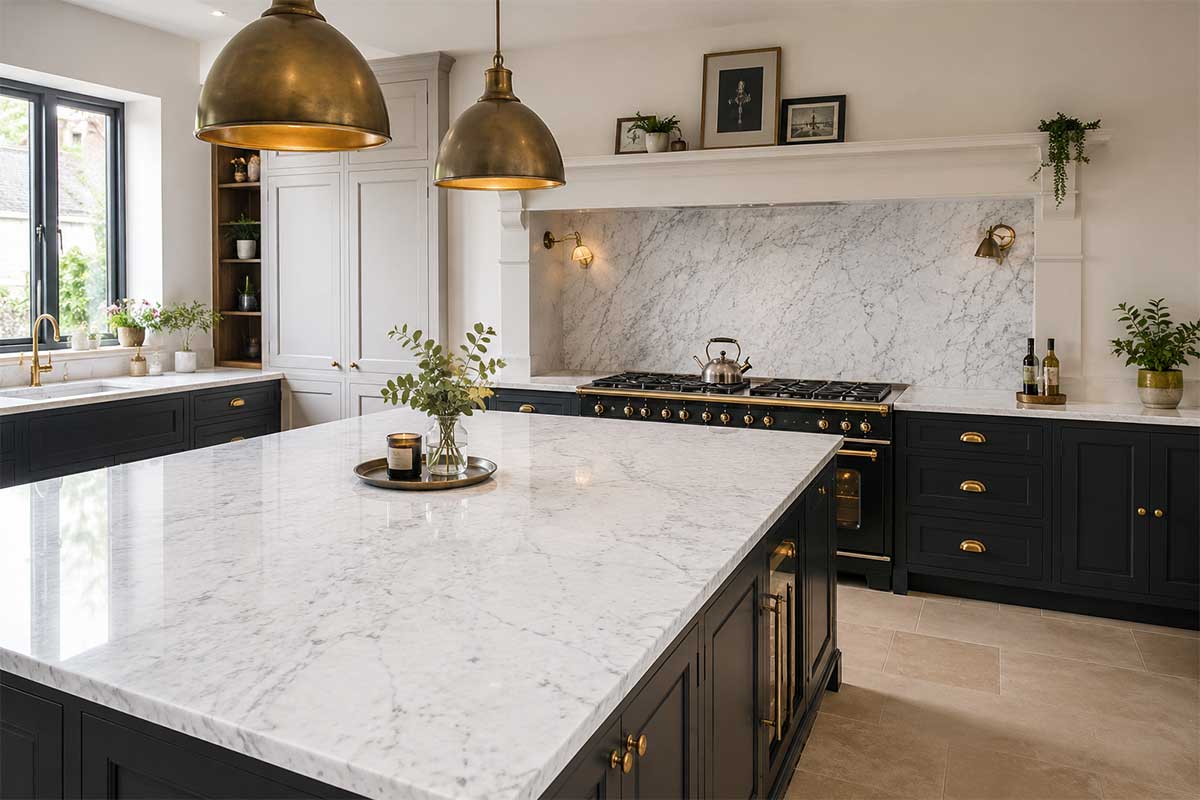
Whether you’re planning a new kitchen, bathroom or another interior project, choosing the right stone is about more than appearance alone. Every material has its own characteristics, benefits and maintenance requirements, which is why expert advice is so important for making the right choices.
As experienced fabricators, suppliers and installers of Carrara marble, granite, quartz, porcelain and other stone surfaces, we work with homeowners, interior designers and trade professionals to create bespoke kitchen worktops, marble vanity tops, splashbacks and decorative stone features.
From timeless Carrara marble to rare and exotic natural stones, or low-maintenance marble-effect quartz and porcelain alternatives, the LBS Stone team can help you choose the surface that’s right for your project and lifestyle.
Visit our showroom in Storrington, West Sussex, to explore a wide range of stone samples, view examples of completed work and speak to our team about the right stone for your home.